My Role
- Led level design process from concepting and layouts to asset integration
- Blocked out and integrated seven levels, including three dungeons and four open-world areas
- Managed production timeline and tracked asset completion
- Wrote the narrative and integrated feedback from team members
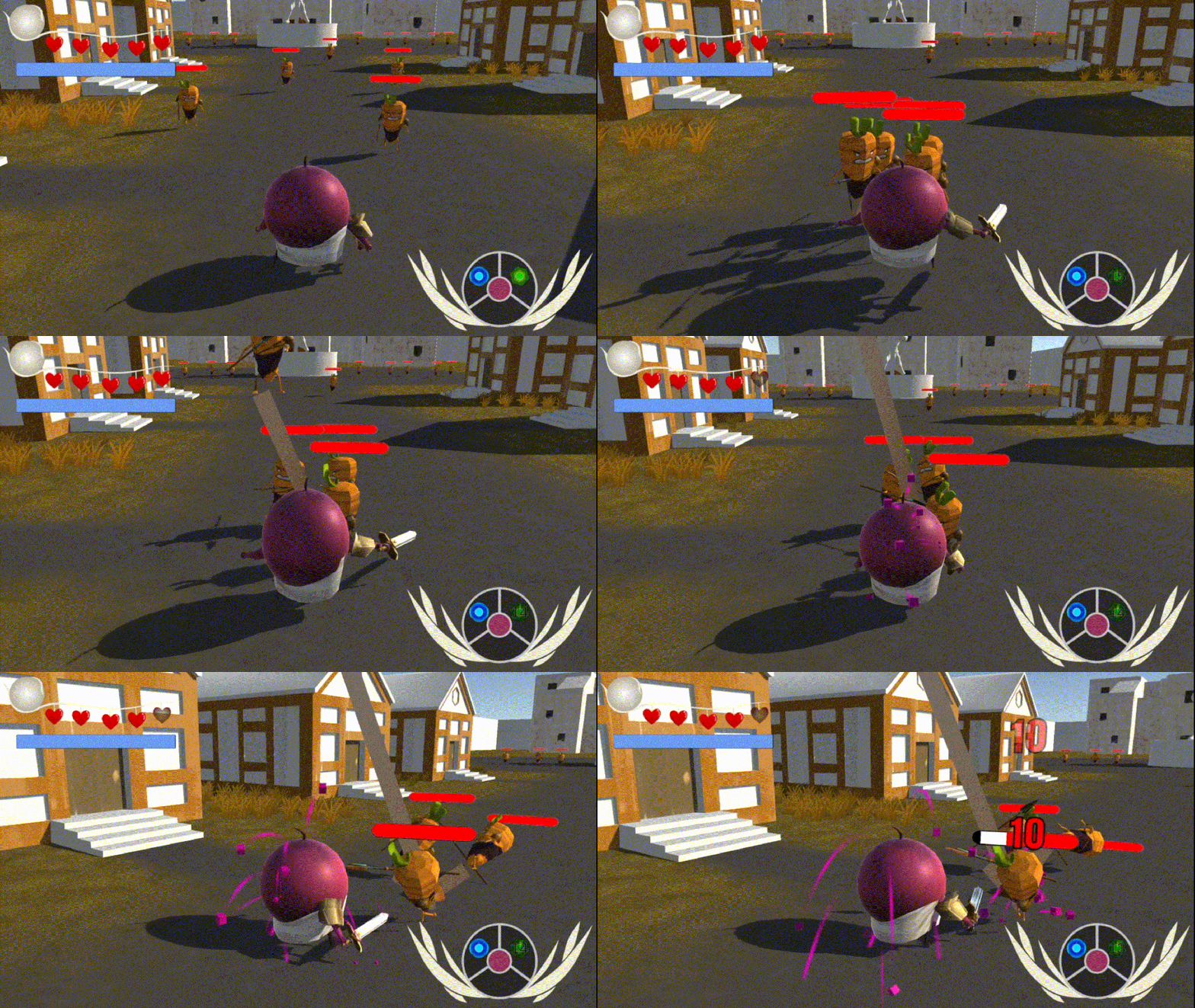
- Communicated with programmers to refine combat loop and balance boss difficulty
Odyseed is a 3D action-adventure game where you fight monsters using swords and elemental powers. I built this game with a team of 7 fellow students as my senior capstone project in 2023, acting as the producer and main level designer.
Level Design
Odyseed was inspired by The Legend of Zelda and Hollow Knight, so I sought to incorporate two level types: open world areas and dungeons.
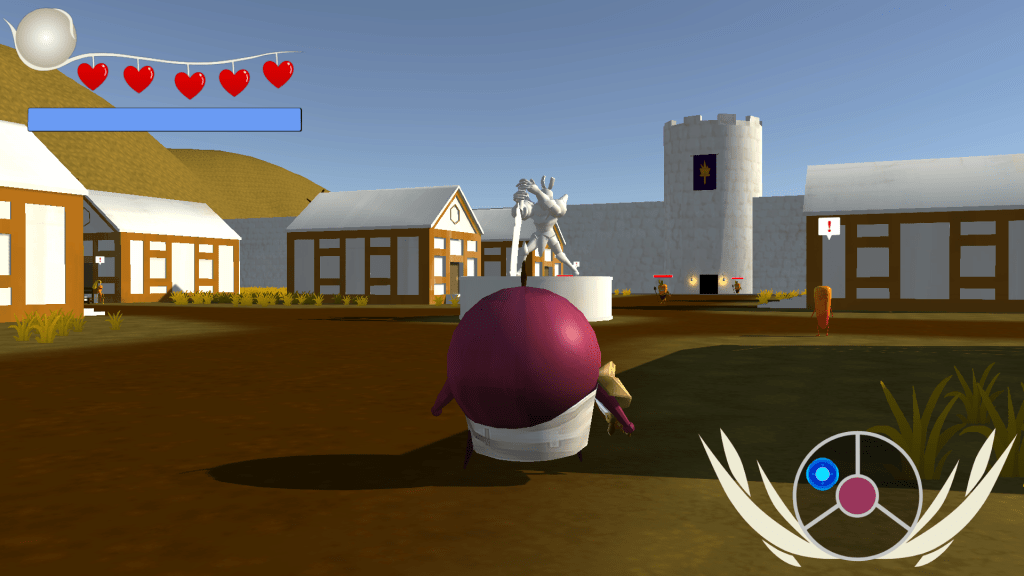
Open world areas featured NPCs for the player to interact with, as well as basic enemies. My favorite level to design was the second open-world level, the Potato Hills. I built it in three stages, starting with rough sketches of the main three pieces, then building out the terrain and placing enemies, and finally populating buildings, NPCs and foliage.
One exercise I often did to pace the level was run a stopwatch to see how fast I could get from start to finish, noting which sections felt unnecessarily long and moving landmarks closer together if it felt like I was walking in a straight line without doing anything for too long.
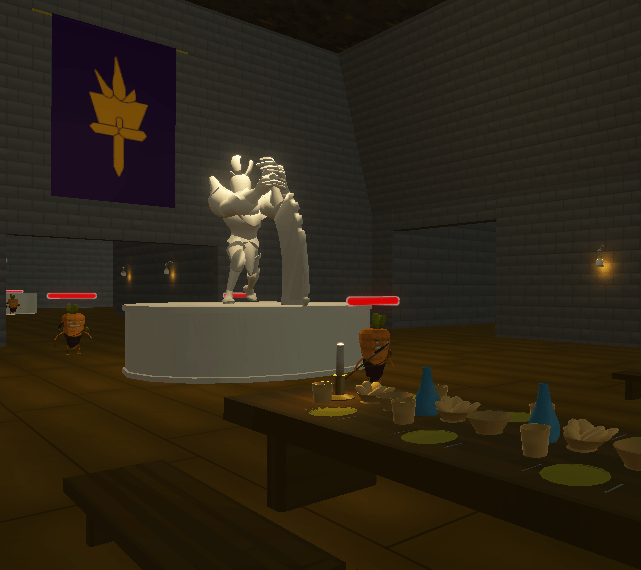
Dungeons were linear indoor areas for players to clear, populated by a mix of weak and middling enemies. Each dungeon featured a boss, and defeating that boss would yield a Power Seed that gave the player new elemental abilities. My favorite dungeon to design was the first dungeon, the Vine-Lord’s Lair. It underwent several iterations between first and second semester, but came together around the end of Spring Break.
Narrative Design
Narrative design was one of the tasks I took on due to personnel changes. Our capstone took place over the span of two semesters, and in between semesters, two students who handled production and narrative design graduated, leading to me assimilating both roles. The initial narrative featured several levels with two groups of antagonists, the Carrot Khanate and the Rot, zombified fruits and vegetables reanimated by an evil force.
The elemental abilities the player develops over the course of the game were driven by Power Seeds, magical seeds representing natural elements like the sun, water and earth, and the story revolved around the player retrieving these seeds in order to return them to the Tree of Life and restore balance to nature. A factional rivalry between Strawberries and Blueberries was also planned, but cut due to time and scope.
Project Management
I was not initially the producer for the game, but took that role in the second semester when our producer graduated. I had some prior experience leading group projects from student organizing work, but it took time for me to adjust to tracking groupmates’ productivity and managing my own.
The main challenge I faced was to manage the game’s scope, which had grown far beyond our actual productivity in the first semester and had to be drastically reimagined in the second semester, particularly after Spring Break.
Ultimately, we got Odyseed across the finish line by setting hard targets on what needed to ship in order for the game to be content complete in the last month, wrestling bugs, sudden issues with our GitHub repository and working late nights up to the finish line.
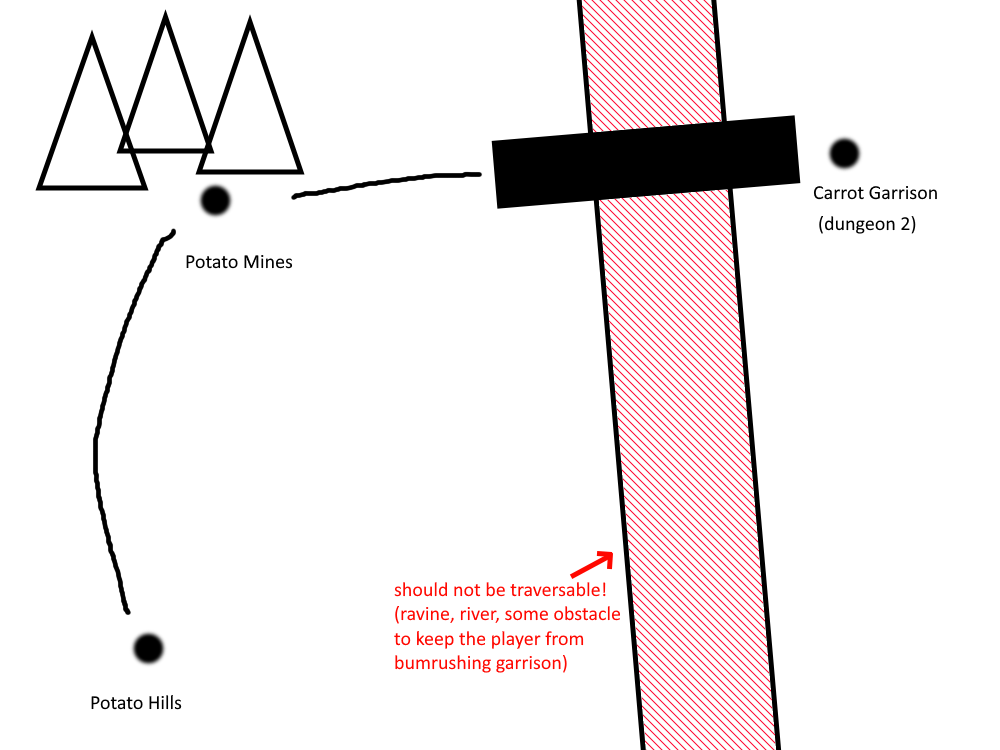
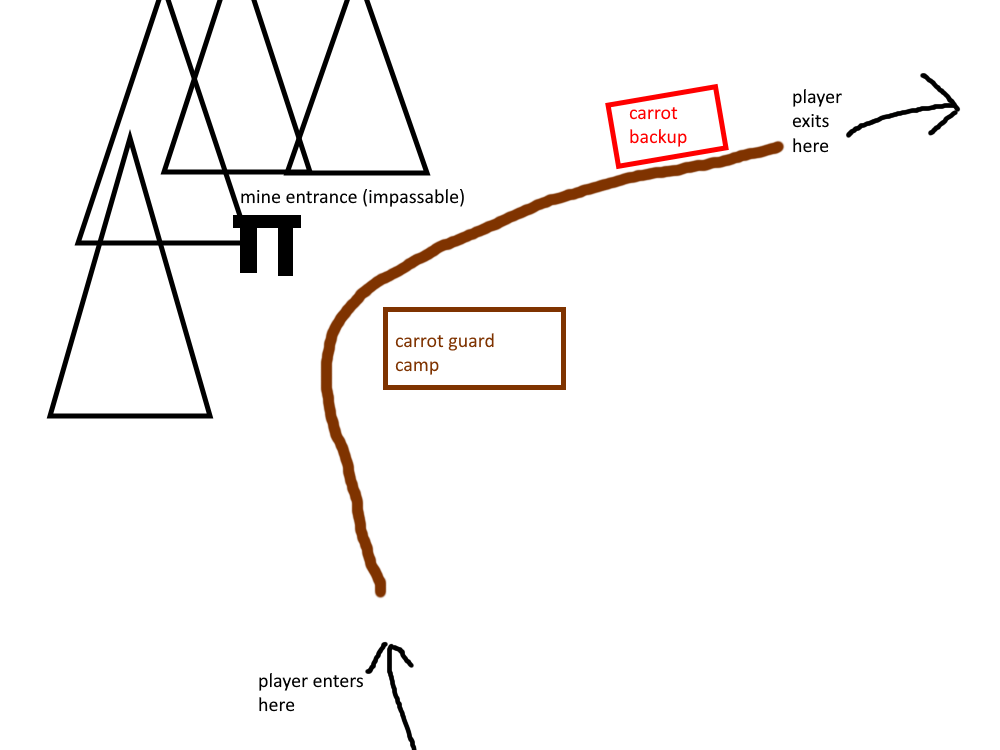
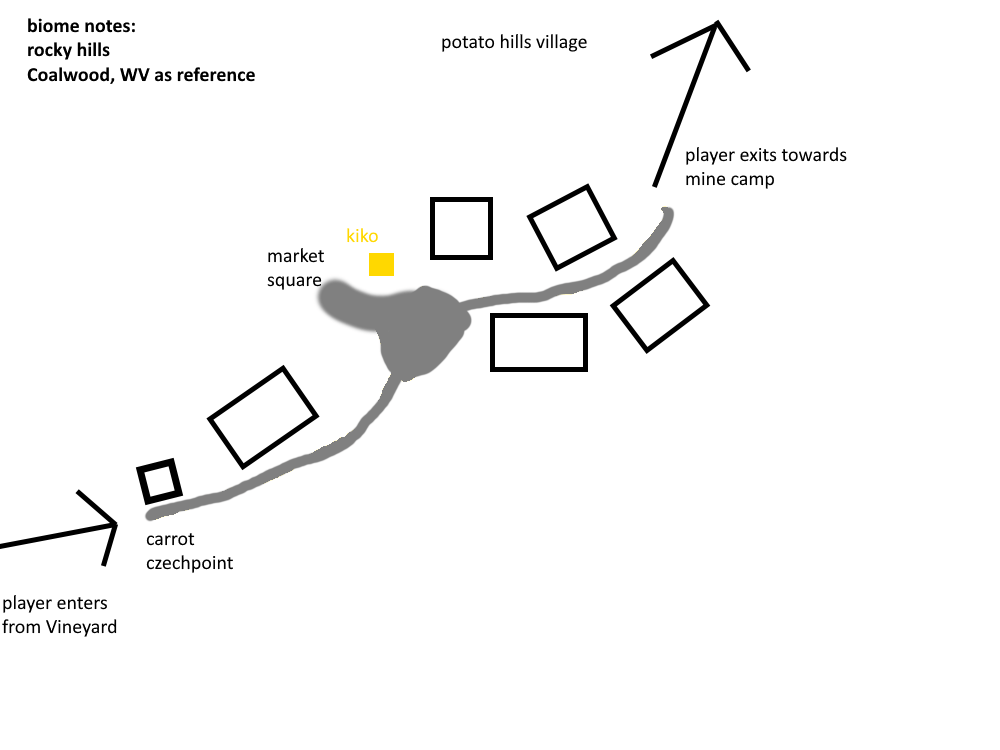
Potato Hills – Initial Location Sketches
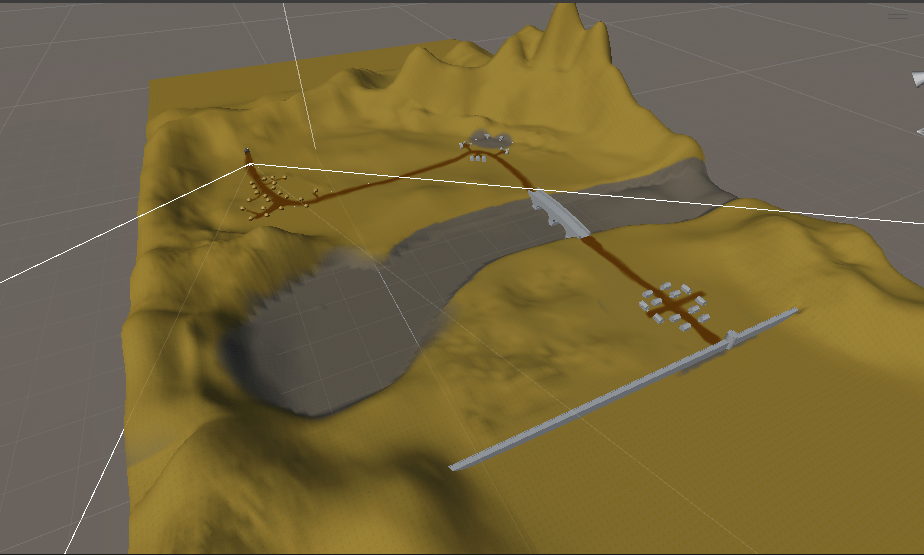
Potato Hills – Terrain & Scaling
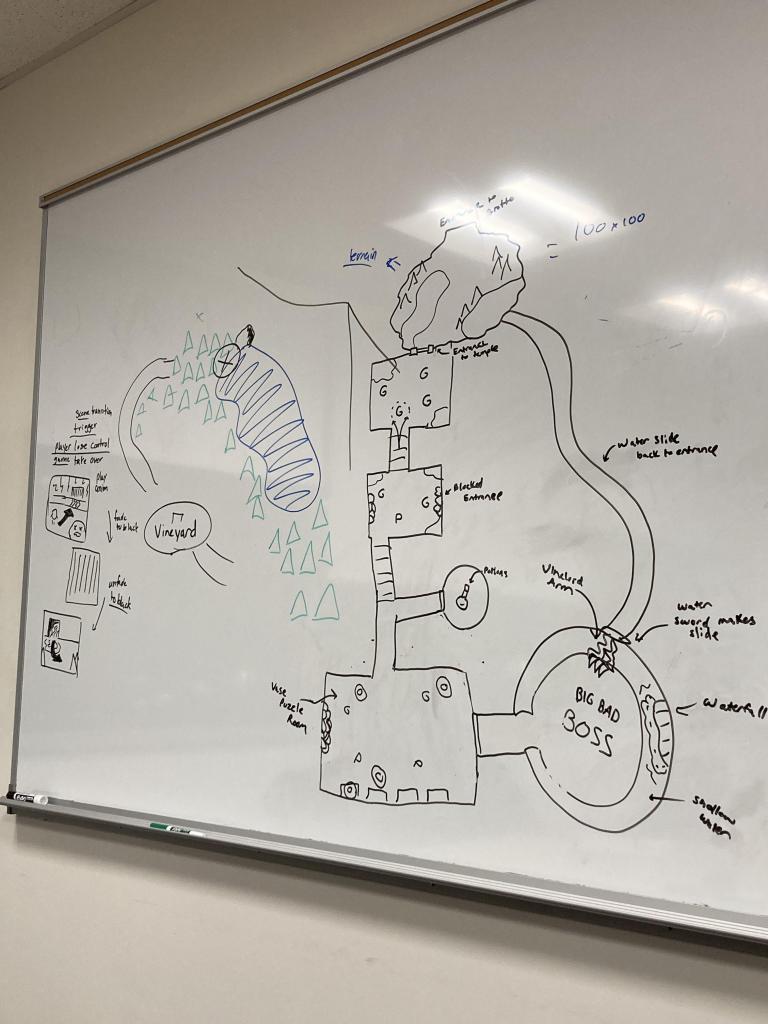
Vine-Lord’s Lair Whiteboard Sketch
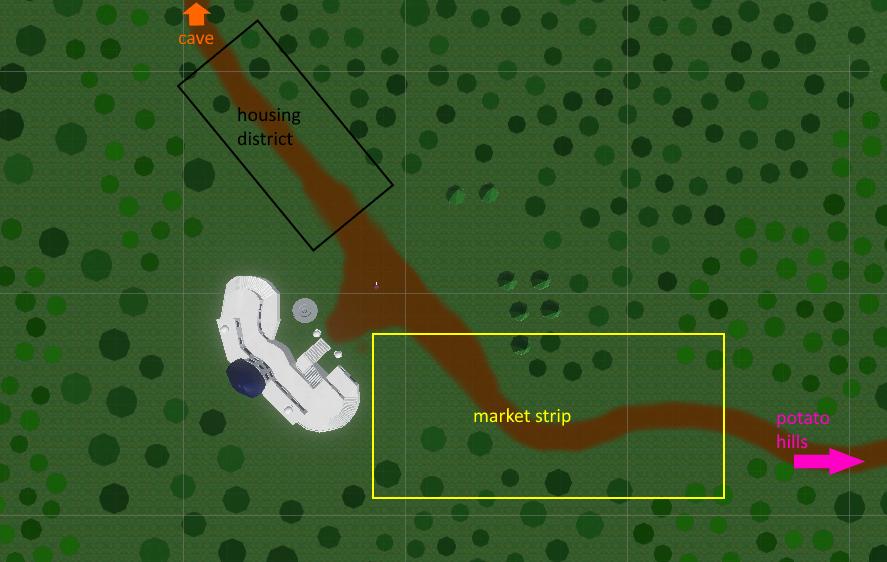
Early layout revisions of the Vineyard, Merlot’s home village. One change made in testing was blocking off the entrance to the Potato Hills until players completed the first dungeon, as some players would navigate ahead to the Potato Hills and skip it.
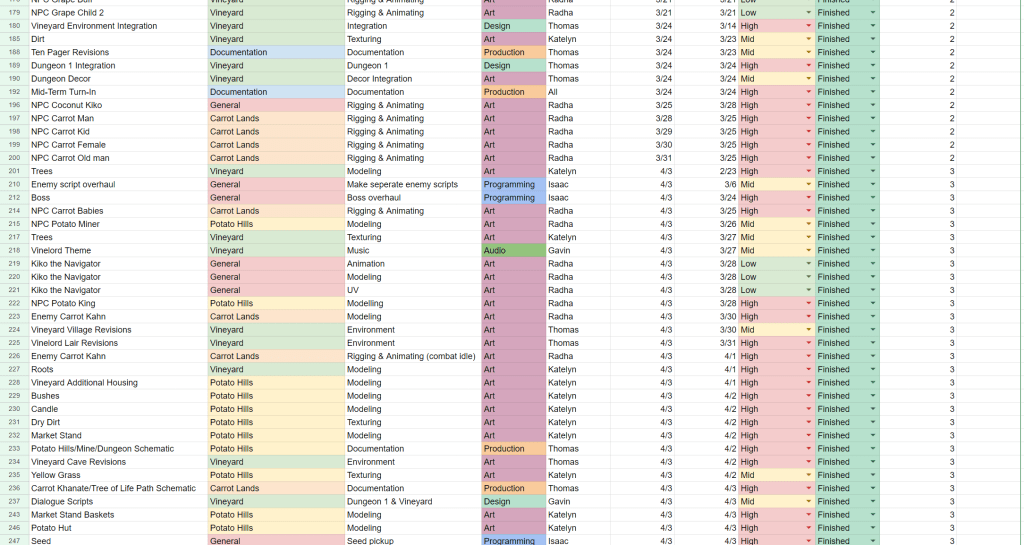
A snapshot of the asset list in mid-March/early April.
Screenshots


 Thomas Stevens